From 500 readers a month to 15,000 in four months
My first project, and the one where I learned that publishing more is not a strategy.
I published every day for a year and nothing happened
I started Neuragate in 2017, in Italy, when almost nobody around me was talking about artificial intelligence. I wrote in Italian about AI, extended reality, computer vision, cybersecurity, robotics and new devices. An audience for that did not exist yet.
I also knew nothing about marketing. That was the point. The blog existed so I could learn it by doing it.
So I did the obvious thing and published roughly one article a day. No copywriting rules. No SEO. No idea what people were searching for or why. I just wrote about whatever I had read that week and pressed publish.
It stayed stuck around 500 readers a month for a year. Not because the topics were wrong, they were early and they were good. Because nothing I published was connected to anything anyone was actually looking for.
That is the lesson that shaped everything I have done since. Volume is not a strategy. Publishing more of the wrong thing gets you more of the wrong thing.
Learn the thing I was missing, then build a team around it
1. I studied positioning and search intent, then rewrote the plan
I stopped writing for a while and studied. Positioning first: what this blog was for, who it was for, and which technology conversations it could realistically own in Italian. Then keyword research, and more importantly intent research. Not just which words people typed, but what they wanted when they typed them.
Then I applied it to the blog. Same topics, completely different decisions about what to publish and how to build each piece. Titles, structure, internal links, the questions each article had to answer before it earned the reader's next click.
2. I recruited my own readers as writers
Researching, planning and writing everything myself was the ceiling. I could do the strategy or I could do the output, not both, not while I was studying and working other jobs.
So I went to the people already reading the blog and asked them to write for it. They knew the material, they were there because they cared about it, and they came pre-qualified by the thing itself. We became a team of 7.
Each person owned one technology domain, from beginner explainers to deeply technical pieces. That is what let the blog cover a subject properly instead of skimming across everything, and it freed me to run the strategy.
3. I built the system that held it together
Seven people writing without a system produces seven different blogs. These are the pieces that kept it one publication:
Search first, distribution second, then double down on what moved
The 30x did not come from writing better. It came from finding the searches that already existed and getting there before anyone else in Italian did.
The order mattered. First I looked at where the blog was already visible and where it was not, which was most places. Then I looked at what was already ranking for the topics I wanted and why, so I could pick the searches I could realistically win instead of the ones I wished I could win. Only then did anyone write.
Search brought the compounding, but the first readers on a new piece came from somewhere else. I posted into niche Reddit communities and LinkedIn groups where those conversations were already happening, and cross-posted early pieces to Medium. That gave each article a starting audience while Google made up its mind.
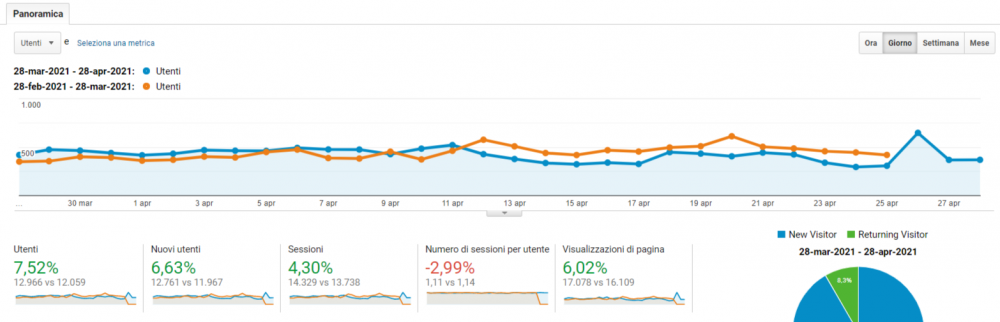
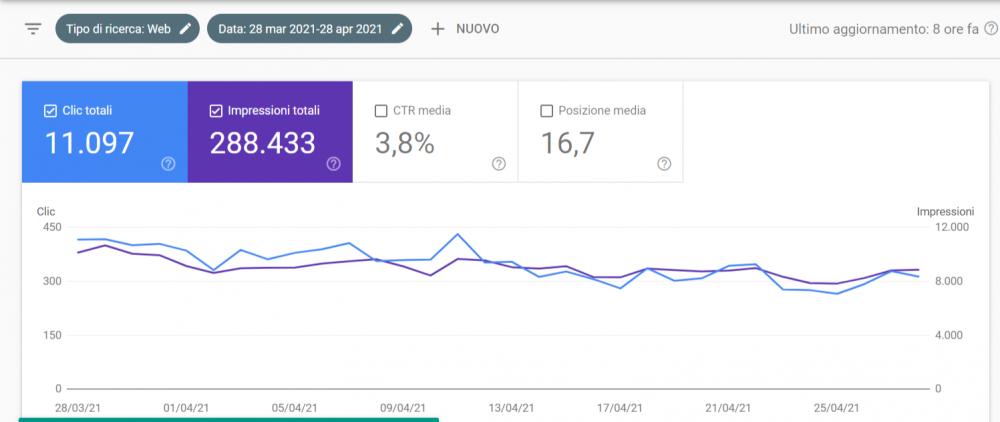
Then I read the data every week and doubled down. When a topic showed growth, the team wrote more of it and went deeper on it, instead of moving on to the next shiny thing. Within four months of the change, the blog went from 500 to 15,000 monthly readers.
This is where OCAVI came from
I did not have a name for any of this at the time. Years later I looked back at what I had actually done here, and at what I did again with my own product, and noticed I had followed the same order both times. Where am I visible, where are competitors winning, what can I realistically compete for, build the pages, keep improving. I wrote it down and made it repeatable, and that is the Search and AI growth system I run for clients now. Neuragate is the proof it works from zero, with no audience, no budget and no brand.
15,000 readers a month, and people who stayed
500 to 15,000 monthly readers, 30x, in four months. Same subject, same language, same person running it. What changed was the strategy underneath.
Over 2 minutes average time on an article. That number is the one I cared about most, because it told me people were reading rather than bouncing off a title that promised something the page did not deliver.
Cited in academic papers and theses. Students and researchers writing about these technologies in Italian found the blog and used it as a source. That is what authority looks like before anyone calls it authority.
About five years of it. Sustained while I was studying and working other jobs, which was only possible because the team and the systems carried the weight instead of me.
The receipts
What I would take into your business
I look at the opportunity before anyone writes a word
Where you are visible today, where your competitors are winning, and which of those searches you can realistically take. A content calendar built before that analysis is a guess with a schedule attached.
I would rather fix ten pages than publish fifty
I spent a year proving that output without direction goes nowhere. If your team is already publishing and nothing is moving, more publishing is not the fix.
I let the data pick what gets more investment
When a topic starts growing, that is the signal to go deeper on it, not to declare it done and move to the next idea. Most of the 30x came from doubling down on a handful of things that were already working.
I build the workflow, not just the pages
A calendar tied to real search data, search work done before the draft, a review cycle and a style guide people actually use. That is what lets a small team hold quality at volume, and it is what keeps working after I am gone.
Your audience is usually already in the room
My best writers were my readers. Your best distribution is usually the communities where your buyers are already talking about the problem, and the customers who already trust you enough to say something in public.
You do not need more content. You need the right pages.
I did this from zero with no budget and no audience, and I have done it since on my own money in the AI era. If people are searching for what you sell and finding someone else, that is a solvable problem, and the order you solve it in is the whole job.